Pull It Before It Pops: Why Smart Builders Are Swapping Clutches Long Before Failure
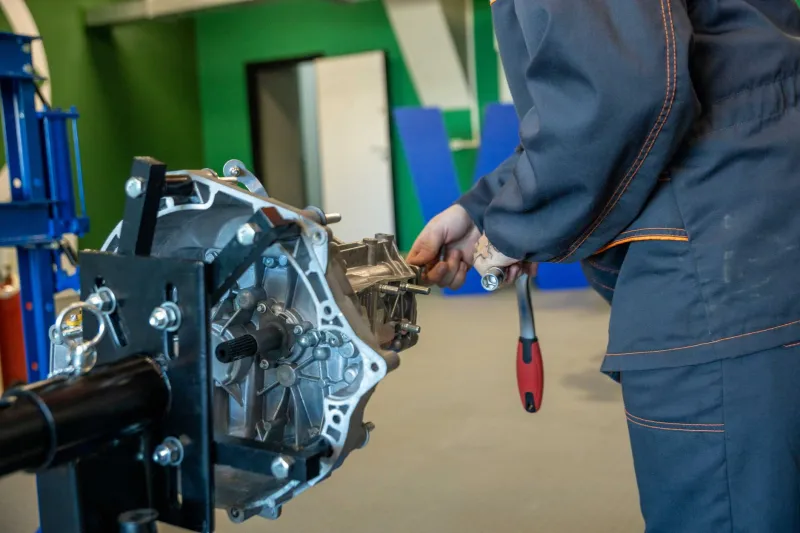
There's a shift happening in garages across the country that doesn't make a lot of noise—at least not yet. Builders who are stacking power are no longer waiting for the telltale smell of burnt friction material or the slipping sensation of a clutch that's given up the fight. They're pulling factory clutch assemblies out of perfectly running cars, sometimes with fewer than 20,000 miles on them, and replacing everything before a single symptom appears.
Call it paranoia. Call it smart money. In the underground build scene, they're calling it survival.
The Math Nobody Wants to Do Until It's Too Late
Here's the scenario that's pushing builders toward proactive swaps: you've spent six months and serious cash building a motor. Cams, pistons, head work, a proper tune—the whole deal. The car makes real power now. Not "fast for a stock platform" power. Legitimately quick numbers. And sitting between that freshly built motor and your drivetrain is a factory clutch that was engineered to handle maybe 60 percent of what you're now throwing at it.
The OEM clutch doesn't know it's on borrowed time. It'll work fine for a while. Maybe a long while. But when it goes, it rarely goes quietly. A clutch that grenades under load can take out the flywheel, score the pressure plate, and in worst-case scenarios, send debris through the bellhousing. Suddenly you're not just replacing a clutch—you're rebuilding a transmission and potentially re-doing work you already paid for.
"I've seen guys lose $4,000 in transmission work because they didn't want to spend $600 on a clutch upgrade before they started making power," says one shop owner in the Atlanta area who asked not to be named. "The math isn't complicated. The problem is nobody wants to spend money on something that isn't broken yet."
Which Factory Clutches Are Living on the Edge
Not all OEM clutch setups are created equal, and the underground scene has developed a pretty clear hierarchy of which platforms need to be addressed first.
Mitsubishi's EVO and Subaru's STI are perennial headliners in this conversation. Both platforms attract builders chasing big turbo power, and both ship from the factory with clutch assemblies that builders describe as "adequate at stock, nervous at stage two, and a liability at anything beyond that." The STI in particular has a reputation for clutch drama once power climbs past the 350-400 wheel range, especially in street-driven cars that see real heat cycles.
Honda K-series builds are another common offender. The K24 in particular has become a favorite swap candidate, and when you're pushing a built K into territory that was never on Honda's engineering brief, the factory clutch becomes a soft spot fast. High-revving applications with aggressive clutch engagement are especially brutal on OEM components.
Late-model Mustangs and Camaros with manual transmissions round out the list. The factory clutches on these cars are genuinely good for street use at stock or mildly modified power levels, but once you start stacking boost or adding serious camshaft profiles, the friction material and pressure plate clamping force become limiting factors that show up at the worst possible moments—usually mid-pull.
The Threshold Question
Talk to enough builders and a general consensus starts to emerge around when the swap makes sense. Most experienced hands put the trigger point somewhere around a 25-30 percent increase over factory power output, though the specific number shifts depending on the platform and how the car is driven.
"For me, it's not just about peak power," explains a builder in the Phoenix area who runs a popular tuning channel. "It's about torque and how fast that torque hits. A naturally aspirated motor that makes power up top is a lot easier on a clutch than a turbo setup that slams torque in hard at low RPM. Two cars can have the same wheel number and one will destroy a clutch twice as fast as the other."
Street-driven builds face additional wear factors that track-only cars don't. Stop-and-go traffic, hill starts, and the general abuse of real-world driving eat into clutch life in ways that dyno numbers don't fully capture. A clutch that might survive 50,000 miles on a track car could be done in 15,000 on a daily-driven build in a city with actual traffic.
The Aftermarket Answer
The good news is that the aftermarket has caught up to where builders are operating. There are legitimately solid clutch upgrade options at multiple price points now, and the days of choosing between a stock replacement and a race clutch that makes city driving miserable have largely passed.
Stage 2 and Stage 3 clutch kits from brands like ACT, Exedy, South Bend, and Clutchmasters have become staple upgrades in the scene—components that offer meaningful improvements in clamping force and heat tolerance without turning the pedal into a leg press. For builds that are genuinely pushing limits, twin-disc setups from companies like OS Giken or Tilton enter the conversation, though those come with pedal effort and engagement characteristics that not every driver wants to live with on the street.
Flywheel selection is part of the equation too. Lightweight aluminum flywheels sharpen throttle response and rev speed, but they run hotter and wear faster than stock. For a dedicated strip car, that trade-off makes sense. For a street build that also runs on weekends, a quality chromoly steel flywheel often represents a better long-term balance.
Proactive Culture Is Just Good Building
What's interesting about this shift toward preventative replacement is what it says about how underground build culture is maturing. There was a time when the ethos was pure reaction—you broke something, you fixed it, you went harder. That approach produced a lot of great stories and a lot of expensive lessons.
The builders who've been in the game long enough have started thinking more like engineers and less like gamblers. They understand that a build is a system, and every component in that system has a threshold. Respecting those thresholds isn't being soft—it's being efficient with time and money in a hobby that demands both.
Pulling a factory clutch before it fails isn't about being cautious. It's about controlling when and how you spend your money, rather than letting a parts failure make that decision for you at 1 AM on the side of a highway with no trailer and a long drive home.
The clutch is going to need to come out eventually. The only question is whether you do it on your terms or its terms.