Gearbox Graveyard: How Underground Builders Are Keeping Transmissions Alive When Big Power Comes Knocking
Here's a scenario every serious builder has lived through at least once. You spend months on a motor build — fresh bottom end, ported heads, aggressive cam, the whole deal. You get it dialed in on the dyno. Numbers are stupid good. You hit the street, make a couple hard pulls, and then you hear it. That grinding, clunking, gut-dropping sound that tells you the transmission just turned itself into an expensive pile of metal shavings.
The engine survived. The gearbox didn't.
It happens constantly in the underground scene, and it's happening more often now that power levels are climbing faster than transmission tech can keep up. We dug into why factory gearboxes keep dying behind built motors, and more importantly, what the builders who actually know what they're doing are engineering around it.
Why the Factory Never Planned for This
OEM transmissions are engineered around a very specific set of assumptions. The factory knows exactly how much torque the engine makes, when it makes it, and how the ECU is going to manage power delivery across the rev range. Everything is tuned to play nicely together. Clutch packs, shift solenoids, torque converter lockup — it's all calibrated for a stock power curve with predictable ramp rates.
The moment you start modifying the motor, you're breaking that contract. A built engine doesn't just make more power — it makes power differently. Boost comes on harder. Torque peaks at different RPMs. Power delivery can be violent in ways the factory transmission control module was never designed to manage.
"The problem isn't just peak torque numbers," says Marcus, a transmission specialist running a shop outside of Houston that handles a lot of high-output domestic builds. "It's the rate of change. How fast that torque hits the input shaft. A stock 10-speed behind a stock LS is fine. Put 700 rear-wheel torque behind it with a turbo that spools fast and that transmission is getting hammered in ways it was never stress-tested for."
Modern automatics are especially vulnerable because they're so electronically dependent. The TCM is making hundreds of micro-decisions per second based on sensor data that was calibrated for stock conditions. Feed it a signal environment it doesn't recognize and it starts making bad calls — wrong gear at the wrong time, clutch engagement that doesn't match load, shift timing that causes shock loading on components that can't handle it.
The Manual Isn't Off the Hook Either
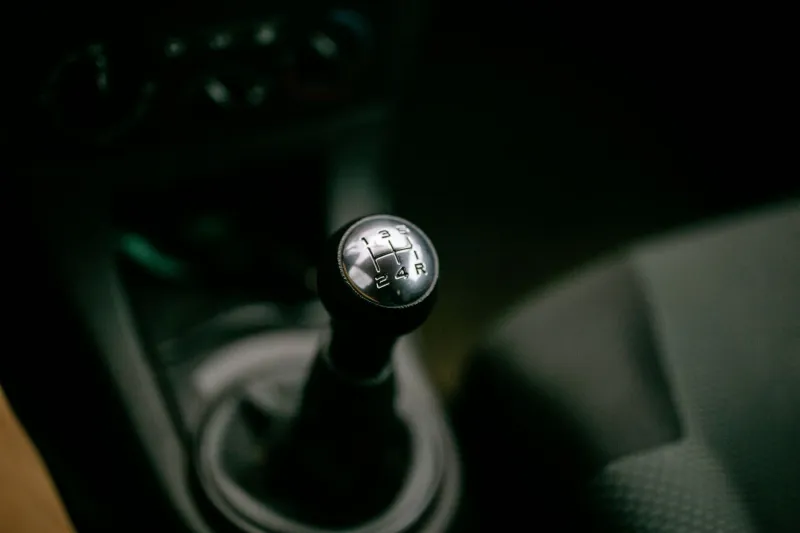
Before manual transmission loyalists start feeling smug, let's be clear: row-your-own gearboxes have their own catastrophic failure modes under serious power.
The synchros go first, usually. Then the shift forks. Then you start grenading gear sets. T56s and TR6060s are popular targets because they're in so many popular platforms — third gen Camaros, Challengers, Mustangs — but the factory versions were spec'd for stock torque loads. Push them past their design limits often enough and they'll tell you about it.
"I've seen T56s blow second gear clean out of the case," says Darnell, who builds Camaro and Firebird packages at a shop in the Atlanta area. "Guy had a solid 600 horsepower small block, good tires, decent driver. But he was side-stepping the clutch at 4,500 RPM every single pass. You do that enough times and the gearbox just gives up."
The load isn't just about peak numbers. It's about consistency, heat cycles, and how the power is actually being delivered to the input shaft on every launch.
What Underground Builders Are Actually Doing
The solutions being cooked up in serious underground shops aren't coming from a catalog. Some of this is genuinely experimental, and a lot of it involves combining components and strategies that OEM engineers never intended to work together.
Adaptive TCM Tuning
For automatic builds, the biggest gains are coming from deep TCM recalibration — not just raising line pressure or adjusting shift points, but fundamentally rewriting how the transmission controller interprets throttle position, load, and power delivery. Shops with access to serious transmission tuning software are building custom shift maps that account for the actual torque curve of the built motor rather than the stock one.
This means the transmission is making decisions based on reality instead of factory assumptions. Clutch apply pressures are matched to actual load. Torque converter lockup timing is adjusted to prevent shock loading. Shift events are synchronized with the actual power band rather than a ghost of the stock tune.
Upgraded Internals on a Budget
Not every build has a budget for a full billet transmission. What a lot of smart builders are doing instead is targeting the failure points specifically. In GM 8-speeds and 10-speeds, that usually means upgraded clutch packs and hardened input shafts before anything else. In the ZF 8HP — which is in everything from BMWs to Challengers to Jeeps — the weak link tends to be the mechatronic unit and the clutch material under sustained abuse.
"You don't have to rebuild the whole transmission to make it survive," Marcus explains. "You identify where it fails first and you address that. Then you tune around the remaining limitations. It's smarter than just throwing money at it."
Torque Management Strategies
This is the one that causes arguments. Some builders are deliberately pulling timing or limiting boost during shift events to reduce shock load on the transmission. The engine makes less power for a fraction of a second during the gear change, which keeps the drivetrain alive.
Street racers hate this because it feels like leaving performance on the table. But the builders who've been doing this long enough have a different perspective. "What's better," Darnell asks, "a car that makes full power every millisecond and needs a new transmission every six months? Or a car that's two tenths slower on paper but actually shows up every time you need it?"
Going Full Custom
At the top end of the underground build spectrum, some shops are abandoning factory transmission platforms entirely. Jerico and Liberty gearboxes, built specifically for racing applications, are showing up in street builds where the budget allows. Sequential-style shifts, purpose-built gear sets, no electronic complexity to fight with. The tradeoff is drivability — these aren't comfortable daily drivers — but for dedicated race builds that happen to use public roads, it's a clean solution.
The Bigger Picture
What's driving all of this is the same force that drives everything in the underground scene: the factory is building more powerful cars than ever, and the aftermarket is pushing even further past those numbers. Transmissions have become the new bottleneck.
Five years ago the conversation was about heads and cams and boost. Now the builders who are actually ahead of the curve are spending just as much time thinking about what's behind the motor as what's in it. Because it doesn't matter how good your engine build is if the gearbox turns to gravel the first time you really get on it.
The shops doing this right aren't just throwing parts at the problem. They're thinking about the whole drivetrain as a system, tuning it holistically, and engineering solutions that match the actual demands of how these cars get used.
That's the difference between a build that lasts and a car that becomes a cautionary tale on a forum somewhere.
Build smart. Tune everything. And maybe stop side-stepping the clutch at 4,500.