Pump Gas Is a Lie: What Switching Fuels Actually Does to a Built Motor
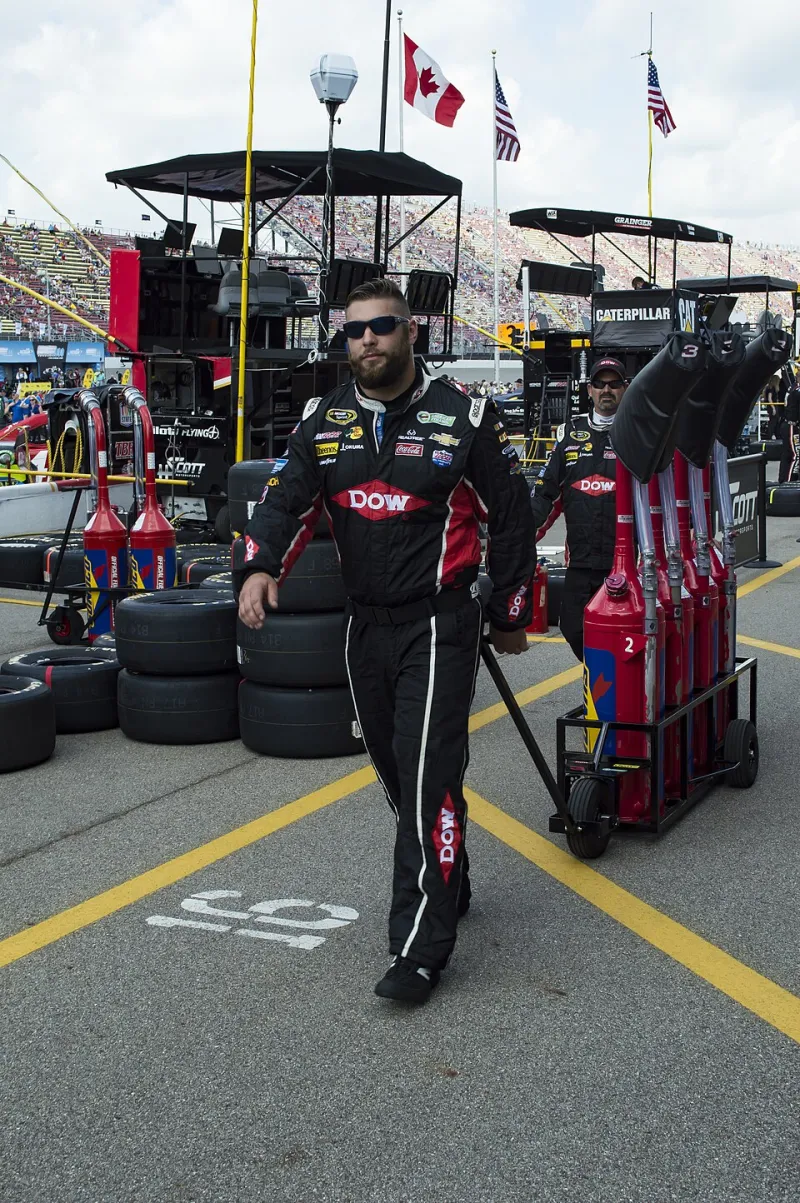
Photo: Paula R. Lively from Zanesville, CC BY 2.0, via Wikimedia Commons
Every underground builder eventually hits the same wall. The tune is dialed, the boost is climbing, and then—knock. That hollow, metallic rattle that means your engine just tried to kill itself. Nine times out of ten, the culprit isn't the turbo, it isn't the injectors, and it isn't your tuner's map. It's the fuel. Or more specifically, it's the gap between what your build demands and what 93-octane pump gas can actually deliver.
Fuel selection is one of the most misunderstood decisions in the tuning world. People treat it like a checkbox—just run premium, you're fine. But once you start pushing real boost numbers or aggressive compression ratios, that mindset will cost you a motor. We talked to builders and tuners from the Southeast to the Pacific Northwest to get the real story on what different fuels actually do once they're inside a modified engine.
Why Octane Isn't About Power—It's About Survival
Here's the first thing most people get wrong: octane rating doesn't add power. It prevents detonation. That distinction matters more than people realize.
Octane is a measure of a fuel's resistance to autoignition—its ability to stay stable under pressure and heat until the spark plug fires it at exactly the right moment. When fuel ignites prematurely or unevenly, you get knock. Knock is essentially a small explosion happening at the wrong time, and in a high-compression or high-boost engine, those micro-events add up fast. Cracked ringlands. Damaged pistons. Spun bearings. None of that shows up on a dyno sheet until it's too late.
Standard 93-octane pump gas—already a moving target since octane ratings vary by region, and most of the country is still on 91—has a ceiling. For a mildly modified daily driver running modest boost, it's usually enough. But push past 15 psi on a turbocharged setup, or build a high-compression naturally aspirated motor, and you're borrowing time.
"I had a customer come in running a stock fuel map on a built 2JZ with a big single," says Marcus, a tuner operating out of a private shop in the Atlanta metro area who asked we keep his last name out of it. "He'd been chasing a knock code for two months. We switched him to 100-octane leaded and the knock went away immediately. The tune hadn't changed. The fuel did all the work."
The E85 Conversation Nobody's Having Honestly
E85—the ethanol-gasoline blend sold at select pumps across the Midwest and increasingly available in other regions—has become the underground builder's open secret. On paper, it looks almost too good: an octane equivalent hovering around 105, dramatically better heat absorption properties, and the ability to run more aggressive ignition timing and higher boost without detonation. In practice, it delivers on those promises. But the tradeoffs are real and the community doesn't always talk about them straight.
First, the good. Ethanol's latent heat of vaporization is roughly three times higher than gasoline. That means when E85 enters the combustion chamber and vaporizes, it pulls significantly more heat out of the intake charge. Cooler charge air is denser charge air, and denser charge air means more oxygen per cycle, which translates directly into more power potential. Tuners running E85 on forced-induction builds routinely see 15 to 25 percent power gains over an equivalent pump-gas tune—not because of magic, but because the engine can now safely run the timing and boost it was always mechanically capable of running.
The less-glamorous side of E85 is the infrastructure it demands. Ethanol is corrosive to rubber and certain metals, which means older fuel systems—lines, seals, injector internals—need to be upgraded or replaced. Ethanol also has roughly 34 percent less energy density than gasoline, so your injectors need to flow proportionally more fuel to maintain the right air-fuel ratio. That means bigger injectors, a higher-flow fuel pump, and a flex-fuel sensor if you want to run any blend without manually adjusting the tune.
"E85 is not a bolt-on," says Diana, who tunes out of a garage in the Phoenix area. "I've seen guys buy a flex-fuel kit online and think they're done. Then they wonder why the car runs like garbage on a cold start or why it's running lean at full throttle. You have to commit to the build. Do it right and E85 is incredible. Do it halfway and you'll hurt something."
Race Gas: When You Need a Sure Thing
For builders who don't have reliable E85 access—or who are running a dedicated track or strip car that doesn't need to pump through a gas station—leaded race gas is still the gold standard for detonation resistance. VP Racing, Sunoco, and similar suppliers offer blends ranging from 100 to 116 octane, with some specialty fuels pushing even higher.
The appeal is consistency. Unlike pump gas, which can vary in ethanol content, additive packages, and actual octane rating depending on the region and the station, race gas is tightly spec'd. You know exactly what you're getting. For a car with a locked-in race tune, that predictability is worth the premium.
And there is a premium. Race gas typically runs anywhere from $10 to $20 per gallon depending on the blend and supplier. For a street car doing daily miles, that math doesn't work. For a dedicated build that only sees the track a few weekends a year, it's entirely manageable—and it's cheap compared to a fresh set of pistons.
Leaded fuel also carries a practical caveat: it's incompatible with catalytic converters. Run it through a cat-equipped car and you'll destroy the catalyst quickly. For underground builds running straight pipes or a catless setup, that's a non-issue. For anything that needs to pass emissions, it's a problem.
Blending Your Way Out of a Problem
A growing number of builders are landing somewhere in the middle—literally. Pump-gas-plus-race-fuel blending has become a practical strategy for street cars that occasionally see high-stress situations. A common approach is mixing a gallon or two of 100-octane race gas into a tank of 93 to bump the effective octane a few points. It's not a tuner's first choice, but in a pinch, it works.
The more sophisticated version of this is running a dedicated flex-fuel setup with a tune that adjusts automatically based on ethanol content. Fill with E85 when it's available, fall back to premium when it's not. The ECU reads the blend and adjusts fuel delivery and timing in real time. It's the closest thing to a universal fuel solution the tuning world has right now.
The Bottom Line
Fuel isn't a detail. On a modified build running any kind of real power, it's a foundational decision that shapes what your tune can do and how long your engine survives doing it. Pump gas has a ceiling, and the more you've built, the lower that ceiling gets.
E85 is the best performance value in the game right now—if your fuel system can support it and you're willing to tune it properly. Race gas is reliable and consistent but expensive for daily use. Blending buys you flexibility. None of these options are free, and none of them work without a tune that actually accounts for what's in the tank.
The underground has always figured this stuff out through trial, error, and hard-earned experience. Get the fuel right before you chase more boost. Your pistons will thank you.