Fake Parts, Real Damage: How Counterfeit Components Are Quietly Wrecking Underground Builds
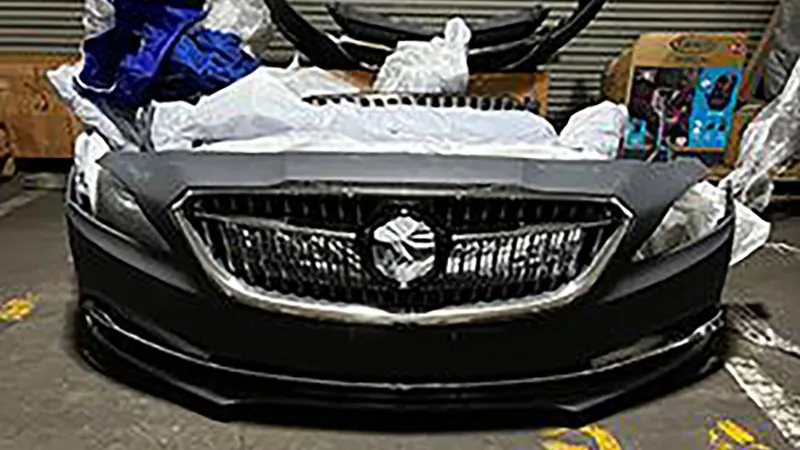
Photo: counterfeit automotive turbocharger fake performance parts comparison, via media.cnn.com
Somewhere in a warehouse outside of Shenzhen, there's a box stamped with a logo you trust. The casting looks close enough. The weight feels about right. The price? Almost too good to believe. That last part should've been the warning.
The counterfeit performance parts market has never been bigger, and it's not just cheap air filters and knockoff shift knobs anymore. We're talking fake turbochargers, cloned fuel injectors, counterfeit ECUs, and fraudulent safety gear moving through the same online marketplaces where legit builders source their components. The underground scene has always been resourceful when it comes to stretching a budget, but this particular shortcut has a nasty habit of ending builds—and sometimes careers—in spectacular, expensive fashion.
The Scale of the Problem
U.S. Customs and Border Protection seized over $2.7 billion worth of counterfeit goods in a recent fiscal year, and automotive parts consistently rank among the top categories. That's not just valve stem caps and decorative badges—that's structural components, safety equipment, and high-performance hardware that ends up bolted onto cars that are pushing real power on real streets.
The tuning market has become a prime target because the margins are fat and the buyers are motivated. Someone building a boosted hatchback on a tight budget is exactly the kind of customer a counterfeit operation loves. You want a quality turbo for $200 less than retail? They've got one. You want name-brand injectors without the name-brand price? Easy. The listings are professional, the photos are lifted straight from the real manufacturer's catalog, and the reviews are either fabricated or left by buyers who haven't run the parts hard enough to find out what they actually bought.
What's Getting Faked—and Why It Matters
Not all fake parts carry the same level of risk, but in the performance world, the most dangerous counterfeits tend to cluster around a few key categories.
Turbochargers are among the most heavily cloned components in the market. Counterfeit turbos often use inferior bearing materials and out-of-spec compressor wheels that can't handle sustained boost. They'll spool up fine on a dyno pull or a short blast down a surface street, but under extended load the tolerances fail. When a turbo lets go at speed, the fallout isn't just a repair bill—it's potential engine destruction, oil fires, and debris through the intake tract.
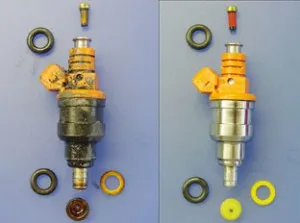
Fuel injectors are another hotbed. Fake injectors frequently have inconsistent flow rates, which throws off your tune in ways that aren't always obvious until detonation shows up. One builder in the Atlanta scene ran a set of counterfeit injectors he sourced through a third-party eBay storefront. Two months after the install, a lean condition under full throttle hammered a piston. The injectors looked identical to the real ones. The part numbers matched. The packaging was convincing. The engine didn't care.
ECUs and piggyback tune devices from gray-market sources carry their own flavor of chaos. Cloned units may run unstable firmware or lack the processing consistency of genuine hardware. A tune built on a fake ECU platform can behave unpredictably under load, and if the unit fails mid-pull, you're potentially looking at uncontrolled fueling or ignition timing events that your motor won't survive.
Safety gear—helmets, harnesses, roll cage hardware—is where fake parts stop being an engine problem and become a life-safety issue. Counterfeit helmets that carry forged Snell or DOT certifications have been documented repeatedly. They look the part. They fail the test.
How to Spot a Fake Before It Spots Your Engine
The most reliable defense is buying directly from authorized distributors or established brick-and-mortar shops with real reputations in the community. That's not always convenient and it's not always cheap, but it's the floor you build on.
Beyond sourcing, there are some practical checks worth running on anything that comes through the mail.
Check the weight. Counterfeit turbos and calipers often use cheaper alloys that don't hit the same weight spec as genuine parts. Pull the manufacturer's published weight and put your component on a postal scale. A meaningful discrepancy is a red flag worth pursuing.
Look at the machining quality. Legitimate performance components have consistent surface finishes, clean port work, and tight casting quality. Fakes frequently show rough casting lines, uneven machining, and inconsistent anodizing or coating. Get a real unit in hand for comparison if you can.
Verify serial numbers and QR codes. Most reputable manufacturers have moved toward serialized authentication. Brands like Garrett, Injector Dynamics, and AEM have verification tools on their websites. If the code doesn't scan or the serial returns no result, you know what you've got.
Trust the price signal. If a part is 40% below every other listing for the same item, the market is trying to tell you something. Performance components have real manufacturing costs. Margins in legitimate distribution channels aren't that elastic.
Where to Actually Source Legit Parts
The underground has always had its network of trusted sources, and that network matters more now than it ever has. Established performance shops—especially those with a track record in the local scene—are worth the premium because they have vendor relationships and reputations to protect. Online, that means buying direct from manufacturer websites or from authorized dealers with verifiable credentials.
Forum culture still serves a real function here. Community threads on platform-specific forums—the LS swap communities, the Honda and Subaru build boards, the Evo and STI circles—carry institutional knowledge about which sellers are legit and which have burned people. That collective memory is one of the underground's most underrated assets.
Group buys organized through trusted community members can also unlock genuine pricing that doesn't require compromising on authenticity. The difference between a group buy through a verified enthusiast and a bulk listing from an anonymous overseas seller isn't just paperwork—it's the difference between a build that runs and one that doesn't.
The Real Cost
The math on fake parts doesn't actually work out in your favor, and it never did. A counterfeit turbo that costs $300 less than the real thing and destroys a motor costs you the engine rebuild, the downtime, the re-tune, and whatever you were supposed to do with that car in the meantime. The underground runs on reputation and results. A build that grenades because of a fake part doesn't just hurt your wallet—it sets your whole program back.
Buy right the first time. The scene's been around long enough to know that cutting corners on hardware is one shortcut that never actually saves you anything.