Gear Wars: The Real Cost of Swapping Transmissions in Today's Underground Build Scene
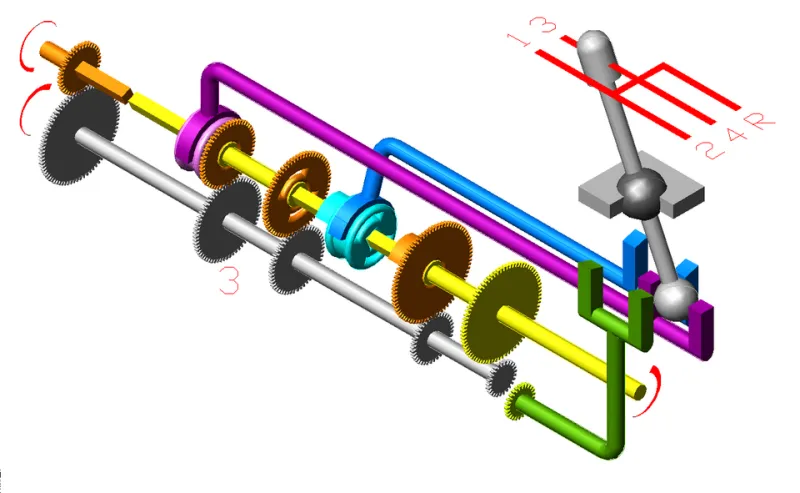
Photo: World arm lamp at English Wikipedia, Public domain, via Wikimedia Commons
There's a moment every serious builder knows. You're staring at a slushbox that's robbing you of every last horsepower you've worked months to make, and the math just clicks: the transmission has to go. Swap in something that actually puts power down, and the whole car transforms. Simple enough, right?
Not anymore.
The transmission swap scene has quietly become one of the most complicated corners of underground building. The boxes that everyone wants are getting harder to find, more expensive to source, and increasingly difficult to make play nice with modern electronics. And if you're running a late-model platform with a factory-integrated TCM, you might be in for a fight that goes way beyond unbolting a bellhousing.
Here's what's actually happening out there—and what you need to know before you pull the trigger.
The Swaps Everyone Wants Right Now
Manual conversions on late-model muscle are still white-hot. The 6R80 automatic in the S550 Mustang is a perfectly capable unit, but the crowd that actually runs these cars on the street wants a manual. The Tremec TR-3160 and TR-6060 are the go-to targets, and kits from shops like Tick Performance have made the swap more accessible than ever. Difficulty rating: moderate. Cost range: $3,500–$7,000 all-in depending on whether you're sourcing a used unit or going new. The catch? Ford's body control module doesn't love losing its automatic friend, and getting the dash to stop throwing fits requires either a tune or a standalone solution.
JDM sourcing for Honda and Subaru platforms is where things get genuinely rough. The LSD-equipped close-ratio gearboxes out of JDM Civic Type Rs and the 6-speed units from WRX STI variants have always commanded a premium, but the post-COVID import landscape hit these hard. Japanese exporters are sitting on less inventory, shipping costs haven't fully recovered, and the US dollar's relationship with the yen has been volatile enough to make budgeting a nightmare. A clean JDM ITR transmission that ran $900 five years ago? Budget $1,800 to $2,400 now, and that's before freight. Difficulty rating for a K-series swap: moderate to hard depending on generation. Cost range: $2,200–$4,500.
The T56 Magnum into everything crowd is still alive and well. Whether it's going into a third-gen Camaro, a Fox Body, or something completely left-field like a V8-swapped S13, the T56 Magnum remains the benchmark for street-driven manual swaps that can handle serious power. Tremec's direct-fit kits have expanded, but the Magnum XL variant—which accommodates higher torque loads—has seen a notable price increase. Expect $3,000–$4,200 for the box alone, up from around $2,400 two years ago.
Why Everything Got More Expensive and Harder to Find
Three things happened more or less at the same time, and the transmission swap scene is still absorbing the impact.
First, the global chip shortage killed new vehicle production for two years. Fewer new cars meant fewer trade-ins, which meant fewer donor vehicles hitting the salvage yards. Core prices—what you pay for a used unit—spiked across the board and haven't come back down the way a lot of people expected.
Second, OEM software integration got significantly more aggressive. Modern transmissions aren't just mechanical assemblies anymore. They're deeply embedded in a vehicle's CAN bus network, and manufacturers have gotten better at making sure their transmissions don't cooperate with standalone systems or competing platforms. Swapping a DCT out of a newer European platform into something it wasn't designed for used to be an enthusiast gray area; now it often requires proprietary software access that's locked behind dealer tools.
Third, the aftermarket got squeezed. Smaller swap kit manufacturers—the kind of one- or two-person operations that built their reputation on niche applications—have struggled with material costs and lead times. Several well-regarded kit makers quietly went dark between 2022 and 2024, leaving gaps in availability for specific platforms.
The Swaps That Are Quietly Getting Easier
Not everything is trending harder. A few swaps have actually gotten more accessible as the aftermarket caught up to demand.
The Aisin AZ6 and similar Toyota close-ratio units into Supra and MR2 platforms have benefited from a growing ecosystem of domestic rebuilders who stockpiled cores before prices peaked. If you're working on a 2JZ build and want a better-shifting alternative to the factory W58, there are more options now than there were in 2019.
GM T5 and Muncie four-speed swaps into classic A-body and F-body platforms remain some of the most well-documented swaps in existence, and the parts ecosystem is mature enough that sourcing isn't the headache it once was. These aren't exciting news, but they're reliable.
The Getrag 420G swap into BMW E46 platforms for track and street builds has also seen improved support from the European tuning community stateside, with better availability of rebuilt cores and documented wiring solutions.
What Underground Builders Are Actually Doing
Talk to anyone running a serious build right now and the theme you'll hear is adaptation. Builders are getting creative with used domestic cores instead of chasing JDM unicorns. Some are leaning on local transmission shops that specialize in rebuilds rather than sourcing fresh units. Others are paying a premium for documentation—buying from sellers who can prove mileage and service history—because the risk of a mystery transmission eating itself six months into a build is too expensive to absorb.
There's also a growing contingent of builders who are making peace with automatics. Not the old slushboxes, but properly tuned modern units running aftermarket valve bodies and custom calibrations. It's not the romantic solution, but on a street-driven build where you're spending 90% of your time in traffic, the argument for a well-tuned 8-speed with paddle shifts is getting harder to dismiss.
The swap culture isn't dying. But it's evolving, and the builders who are staying ahead are the ones treating sourcing like part of the build itself—doing the research, building relationships with importers and yards, and budgeting for the reality of what these swaps cost in 2024, not what they cost in some five-year-old forum thread.
The gear is still out there. You just have to work harder to find it now.