Watts Up: Inside the Underground Movement Rewiring Street Culture One EV Swap at a Time

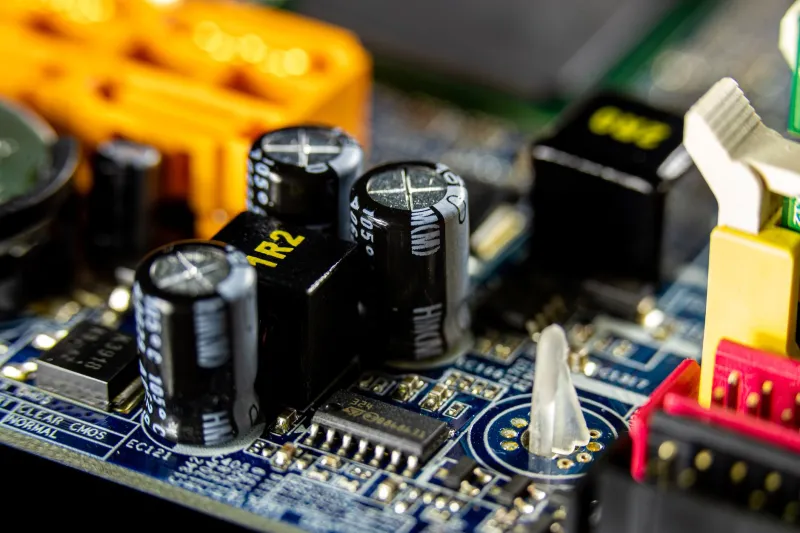
Photo by Photo by migg on Unsplash on Unsplash
Walk into most underground shops and you'll still smell the same things — burnt rubber, oil, maybe a hint of race fuel if someone's been running E85. But lately there's something different cutting through that familiar haze. It's not a smell, exactly. It's more like a vibe shift. Laptops are open to CAN bus diagrams instead of dyno software. Zip ties are holding together battery harnesses instead of intercooler piping. And the guys who used to argue about cam profiles are now deep in conversations about cell balancing and regenerative braking torque curves.
The EV swap scene has arrived in the underground. And it's messier, weirder, and more interesting than anyone expected.
Why Combustion Builders Are Even Looking at This
Let's get one thing straight: nobody in the underground is going electric because they care about the environment. That's not the angle here. The angle is torque — instant, violent, wheel-spin-inducing torque — delivered without a turbo spool, without a clutch, and without the kind of mechanical drama that puts motors in the junk pile.
Builders who've been chasing that perfect power delivery curve for years are starting to realize that electric motors solved that problem a long time ago. A well-spec'd AC induction motor or a purpose-built permanent magnet unit doesn't care about RPM in the same way a combustion engine does. It just pulls. Hard. From zero.
That's a dangerous thing to put in a lightweight platform, and the underground knows it.
"I put a Leaf motor in a first-gen Miata," says Marcus, a builder out of the Phoenix area who asked us not to use his last name. "People laughed until they saw the launch. It weighs less than the original drivetrain, makes about 220 horsepower to the wheels, and I tuned the controller to cut traction control completely. It hooks and goes. No drama."
No drama on the outside, anyway. Behind the scenes, Marcus spent six months learning things that no combustion tuner certification course ever covered.
The Learning Curve Is a Cliff
Here's the part nobody talks about when they hype up EV swaps on social media: the knowledge gap is enormous. Combustion tuning has decades of community-built infrastructure behind it — forums, tuning suites, established shops, guys who've seen every failure mode twice. EV swap culture is basically starting from scratch, and the underground is building that knowledge base in real time.
Motor controllers are the new ECU, and they're not giving up their secrets easily. Most production EV controllers are locked tighter than any factory PCM, and the reverse-engineering work required to unlock meaningful tuning parameters is serious, specialized labor. Some builders are pulling controllers from salvage Teslas and Bolts and spending months mapping out what each parameter actually does before they ever install anything in a project car.
Battery management systems — BMS units, in the shorthand — are another beast entirely. A combustion builder who's never thought about cell voltage balancing, thermal runaway, or state-of-charge algorithms is suddenly responsible for a 400-volt pack sitting two feet behind the driver's seat. The margin for error is not generous.
"You can tune a combustion motor until it grenades and you're mostly just out a motor," says Drea, a fabricator and self-taught EV integrator based outside Atlanta. "You mess up a high-voltage battery pack and you're dealing with a fire that a standard extinguisher won't touch. The stakes are different. You have to respect that."
Drea now runs a small underground workshop focused exclusively on EV conversions and spends as much time on safety infrastructure — proper high-voltage disconnect systems, thermal monitoring, fused protection circuits — as on performance tuning. It's not the most glamorous part of the build, but it's the part that keeps the car from becoming a news story.
The Hacks That Are Actually Working
Despite the steep learning curve, the underground is producing real results. A few tuning strategies have emerged as go-to moves for builders who've put in the work.
Regen tuning is one of the biggest. Regenerative braking — the system that harvests energy back into the battery during deceleration — can be tuned to behave like engine braking in a combustion car, or dialed back to near-zero for a more traditional coasting feel. Builders running track-style events have found that aggressive regen tuning dramatically changes corner entry behavior and can substitute for left-foot braking in ways that feel surprisingly natural once you adapt.
Motor controller overclocking is another frontier, though it comes with real risk. Several builders have found ways to push controller current limits beyond factory spec, unlocking short-burst power figures that the original hardware was never designed to sustain. The trick is thermal management — these controllers generate heat fast when you push them, and without proper cooling, you're looking at a very expensive paperweight in short order.
Then there's the wild west of multi-motor setups. A handful of builders are running dual-motor configurations pulled from salvage AWD EVs, and the torque vectoring possibilities have them genuinely giddy. Getting two controllers to talk to each other in real time, without factory vehicle integration software, is a puzzle that's eating weekends across the country. But the builders who've cracked it are running setups that make AWD combustion builds look primitive.
The Culture Clash Is Real
Not everyone in the underground is rolling out the welcome mat for the voltage crowd. There's a genuine friction between builders who've spent their lives mastering combustion physics and newcomers who show up with salvage EV parts and a YouTube education. The gatekeeping is real, and some of it is fair — half-built high-voltage systems in the hands of people who don't understand them are legitimately dangerous.
But the smarter veterans are paying attention. The builders who've been around long enough to remember when fuel injection was the enemy, when standalone ECUs were voodoo, when turbos were "for ricers" — those guys recognize the pattern. Every new technology gets dismissed until it wins. Then everyone pretends they were always into it.
EV swaps are winning. Quietly, in garages and borrowed bays and late-night fabrication sessions, a new generation of underground builders is figuring out the language of electrons and voltage and motor mapping. They're building something the mainstream tuning industry isn't ready to support yet, which means the underground gets to define what it looks like first.
That's not a new story around here. It's kind of the whole story.
Where This Goes Next
The next two years are going to be interesting. As more EVs hit the salvage market — wrecked Teslas, crashed Ioniq 5s, flood-damaged Rivians — the parts supply for underground EV builds is only going to improve. Controller documentation will get better as the community reverse-engineers more units. Battery pack prices will drop. The knowledge base will deepen.
And at some point, some builder in some unremarkable garage is going to put together an EV-swapped platform that runs a number nobody expected, on a street that doesn't show up on any official event calendar, and the whole conversation is going to shift.
When that happens, remember you heard about it here first — back when it was still just a bunch of people arguing about cell balancing at two in the morning, running on bad coffee and the kind of stubborn curiosity that's always been the real fuel of underground culture.