Corner Killers: How Serious Builders Are Bending Suspension Geometry to Break Factory Performance Ceilings
Everybody wants to talk about horsepower. Flash a tune, bolt on a turbo, post the dyno sheet. That's the content that moves. But ask the builders who are actually running competitive times—street or strip—where their real edge comes from, and a lot of them will point somewhere most enthusiasts never look: the corners of the car.
Suspension geometry isn't glamorous. It doesn't make noise. It doesn't show up on a dyno graph. But right now, some of the most technically obsessed builders in the underground are treating geometry, ride height, and brake bias as primary performance variables—not afterthoughts. And the results they're getting are making stock suspension setups look like factory handicaps, which, to be fair, is exactly what they are.
Why the Factory Geometry Is Working Against You
Here's the thing manufacturers don't advertise: your suspension was engineered around a compromise. Ride comfort, tire wear, liability, and regulatory compliance all got votes in that design meeting. Performance was somewhere on the list, but it wasn't running the show.
Camber curves, caster angles, toe settings, roll center height—all of it was dialed in to keep a broad range of drivers from getting into trouble. That means your car is leaving measurable performance on the table before you ever touch a wrench.
Take a late-model Mustang GT as an example. Stock front geometry runs relatively conservative static camber, typically around -0.5 to -1.0 degrees. That's fine for daily driving. But when you're pushing lateral G-loads in a corner, that tire contact patch starts walking, and you lose front grip right when you need it most. Dial in -2.5 to -3.0 degrees up front with proper camber plates and a stiffer spring rate, and the same car starts rotating through corners with a confidence that feels like a completely different vehicle.
Builders in the Atlanta and Dallas underground scenes have been running this kind of setup on everything from FRS platforms to G35s—not because it's new information, but because it compounds with everything else they're doing.
Ride Height as a Performance Variable
Dropping a car is usually framed as an aesthetic move. That's how it gets sold, and that's how a lot of people think about it. But serious builders understand that lowering a vehicle—done correctly—is a handling modification first.
Lowering the center of gravity reduces body roll. Less body roll means more consistent tire loading through transitions. More consistent tire loading means faster, more predictable cornering. The visual payoff is real, but it's a side effect.
The catch is that you can't just slam a car and call it geometry work. Drop it wrong—wrong spring rate, wrong shock valving, wrong alignment after the drop—and you've made everything worse. Bump steer gets amplified. Camber gain through suspension travel goes negative. You've lowered the car and degraded the handling, which is exactly what you see on a lot of Instagram builds that look fast and drive like garbage.
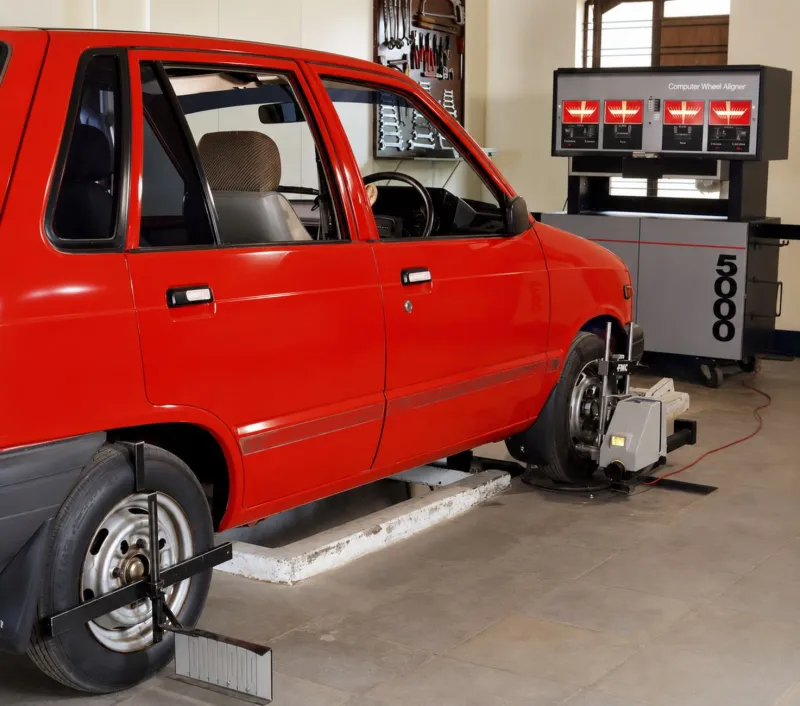
Builders who know what they're doing are running coilovers with adjustable perches, pairing them with camber arms or eccentric bolts to correct alignment after the drop, and then spending real time on an alignment rack dialing in the full geometry picture. It's slower. It costs more. It doesn't photograph as well as a wheel gap shot. But it's the difference between a show car and something that can actually be driven hard.
Brake Bias and the Stability Control Problem
This is where it gets complicated—and where the underground angle really comes into play.
Modern stability control systems, traction control, and electronic brake force distribution are not neutral actors. They're programmed with factory assumptions about how the car is supposed to behave. Change the suspension geometry significantly, drop the ride height, run stickier tires, and those systems start fighting you. The car's behavior no longer matches the model the ECU was built around, and the electronic safety net starts triggering at the wrong times.
Adjusting brake bias—shifting braking force distribution front to rear—is one of the most effective ways to tune a car's handling balance under hard braking and corner entry. Stock setups are heavily biased toward the front, which is safe and predictable for everyday driving. Dial in more rear bias and you get better rotation, faster corner entry, and a car that responds to driver input instead of fighting it.
But here's the friction point: most factory ABS and stability control systems don't play well with brake bias changes. The system expects a certain pressure ratio. Throw that off and you get false interventions, inconsistent pedal feel, and in some cases, warning lights that won't clear.
Builders are handling this a few different ways. Some are running aftermarket brake bias bars with a manual adjuster in the cockpit—an old-school motorsport solution that bypasses the electronic system entirely for the rear circuit. Others are going deeper, working with standalone ABS controllers or retuning factory modules to accept the new bias parameters. A small number are disabling stability control entirely for track or closed-course use and relying on driver skill and mechanical setup.
None of this is a plug-and-play solution. It requires understanding how the systems interact, and it requires testing. A lot of testing.
The Geometry-Tune Interaction Nobody Talks About
Here's the piece that ties all of this together: suspension geometry changes affect how your ECU tune performs.
Change the ride height and you change the car's aero profile—even on vehicles that weren't designed with significant downforce in mind. Lower the car and you reduce underbody turbulence, which at triple-digit speeds starts to matter. Run more aggressive camber and you change how the tire heats up, which changes how grip builds through a session, which changes the window where your engine tune is actually operating at its intended parameters.
Builders who are doing this right are treating the car as a system. The tune, the suspension, the brakes, the tires—they're all talking to each other. Change one and you've changed the context for everything else.
A builder running a built K-series Honda in the Southeast described it this way: "I picked up more time fixing my geometry than I did from the last two dyno sessions combined. The power was already there. I just couldn't use it because the car wouldn't plant." That's not a unique story. You hear versions of it constantly from builders who've gone deep on chassis work.
What It Actually Takes
This kind of build work isn't for everyone. It requires access to an alignment rack, ideally one run by someone who understands performance alignment rather than just factory spec restoration. It requires a willingness to iterate—to make a change, test it, come back, and adjust. And it requires some baseline understanding of suspension geometry principles, which means doing the reading or finding someone who already has.
The payoff, though, is a car that performs at a level that ECU tuning alone can't reach. There's a ceiling on what software changes can do. Physics doesn't have that ceiling—not until you've extracted everything the chassis can give.
The underground has always been about finding the edge that the factory left behind. Suspension geometry is one of the biggest edges still sitting there, underutilized, waiting for builders willing to get into the weeds and work for it.