Off the Map: Inside the Shadow Venues Where Street Racing Has Relocated in 2024
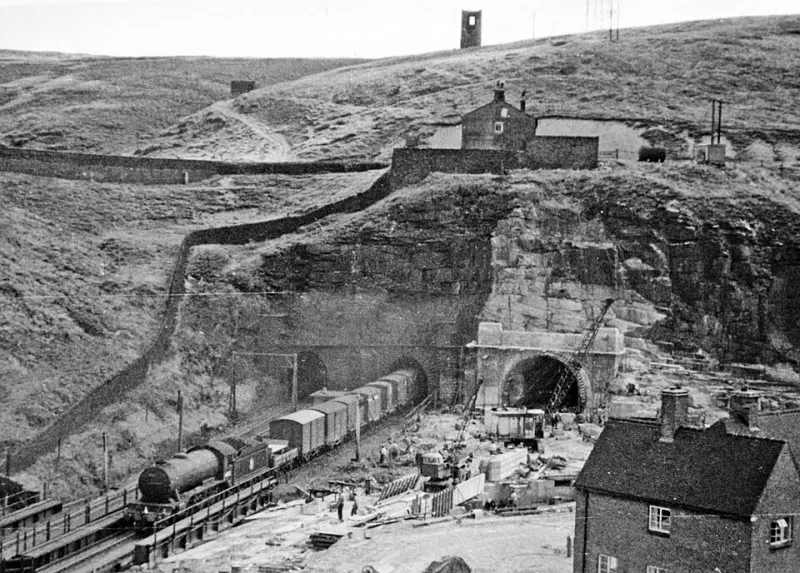
Photo: Ben Brooksbank, CC BY-SA 2.0, via Wikimedia Commons
The spot you heard about last year probably isn't the spot anymore. That's by design.
The enforcement pressure that's been building since 2022—coordinated task forces, aerial surveillance, license plate readers deployed along known gathering corridors—has pushed a significant portion of organized street racing activity off the traditional venues and into places that weren't built for speed but are being used for it anyway. Parking structures. Rail yards. Industrial tunnels. Drainage infrastructure. The geography of underground racing in 2024 looks less like a highway and more like an urban exploration map.
We spent time talking to people embedded in several regional scenes—from the mid-Atlantic to the Southwest—to understand where events are actually happening, how they're organized, and what the real risks look like when you trade open asphalt for confined concrete.
Why the Shift Happened
Ask anyone who's been in the scene for more than a few years and they'll tell you the same thing: the heat got organized. What used to be a handful of local patrol units responding to noise complaints has evolved into multi-agency coordination with real-time data sharing. In cities like Houston, Atlanta, and Los Angeles, dedicated street racing task forces now operate with the kind of intelligence infrastructure that used to be reserved for narcotics units. Surveillance footage gets cross-referenced. Plates get run. Repeat offenders get tracked.
"The old spots became traps," says one organizer from a Mid-Atlantic scene who asked not to be identified. "Everyone knew them. The cops knew them. It stopped being about the racing and started being about who was going to get locked up."
The response wasn't to quit. It was to relocate, and to make the logistics harder to follow. That meant moving away from visible, accessible locations and into spaces that require local knowledge, specific access, and a level of commitment that filters out casual attendees and—critically—informants.
Parking Structures: The Urban Proving Ground
Multi-level parking garages have become one of the more common informal venues in dense urban markets. The appeal is practical: they're enclosed, which provides acoustic cover from the street, they have defined lanes, and they're often accessible after hours in commercial districts where foot traffic drops to near zero after 10 p.m.
What they lack is straightforward. The surface conditions are unpredictable—oil drips, water intrusion from upper levels, expansion joint lips that can unsettle a car mid-run. Ceiling clearance limits how much vertical space you're working with, which matters for visibility and, in the event of a mechanical failure, for keeping a situation from becoming catastrophic in a closed environment.
The runs that happen in these spaces are typically short—one or two levels at most—and more about torque and launch than top-end speed. Think drag-style shootouts rather than full pulls. "It's not about trap speed," one participant from a northeast scene explained. "It's about who can put it down off the line without spinning out on dirty concrete."
The exit strategy matters as much as the event itself. Multiple egress points, pre-positioned lookouts, and a hard cutoff time are standard operating procedure at organized garage events. The ones that get busted are usually the ones that got comfortable.
Rail Yards and Industrial Corridors
In cities with significant freight rail infrastructure—Chicago, Kansas City, parts of Texas—decommissioned rail yards and the access roads built to service industrial corridors have become attractive venues for longer-format events. The surface quality on maintained industrial access roads can actually be competitive with secondary highways, and the relative isolation from residential areas reduces the noise complaint exposure that kills traditional spots.
The access question is more complicated here. Rail property is federally regulated, and trespassing charges in those contexts carry different weight than a local ordinance violation. Multiple scene members we spoke with flagged this as a meaningful escalation in legal risk. "You're not just looking at a reckless driving charge," one Texas-based participant noted. "If you're on active rail property, the federal piece changes the conversation entirely."
That said, the volume of decommissioned and semi-abandoned rail infrastructure in major American metros is significant, and the pace of redevelopment means some of these spaces exist in a legal gray zone that's been exploited by the scene for years.
Tunnel Culture: The Acoustics and the Risk
Railroad tunnels and urban drainage tunnels represent the most extreme end of the venue spectrum, and they've developed something close to a mythology in certain regional scenes. The acoustics alone—the way a built motor echoes off concrete in a confined bore—have become part of the draw. Video content from tunnel runs circulates heavily in underground communities, and the visual aesthetic of headlights cutting through a concrete tube has a cinematic quality that open-road footage doesn't replicate.
But the risk profile in enclosed tunnel environments is genuinely different from anything else the scene runs. Ventilation is limited, which means exhaust and tire smoke accumulate fast. A mechanical failure—a blown tire, a brake fade incident, an engine fire—in an enclosed tunnel with limited egress is a scenario with very few good outcomes. Several sources we spoke with referenced incidents in their regions that didn't make the news but circulated internally as cautionary reference points.
"The tunnel stuff looks incredible on camera," said one organizer who's been active in the Southwest scene for over a decade. "But the people running it seriously are also the most paranoid about safety protocols. You have to be. There's no margin."
Protocols at organized tunnel events typically include pre-run walkthroughs to identify hazards, hard caps on the number of vehicles inside at any time, and dedicated spotters at both ends. The casual versions of these events—the ones that don't have that infrastructure—are where incidents happen.
The Law Enforcement Perspective (From the Other Side)
Several participants described an ongoing adaptation cycle with enforcement. As the scene moves to less obvious venues, detection methods evolve. Social media monitoring has become a standard tool for anticipating events before they happen, which is part of why serious organizers have largely abandoned public platforms in favor of encrypted messaging and tight invitation lists.
Aerial assets—both manned aircraft and drones—are being deployed in jurisdictions with the budget for it, and the enclosed nature of some of these new venues actually creates complications for aerial surveillance. It's not a permanent advantage, but it's a current one.
What It Actually Costs
The underground has always operated on the understanding that the risk is part of the deal. What's changed is the texture of the risk. The move into unconventional venues has traded one set of hazards—traffic exposure, pursuit risk, open-road variables—for another. Structural uncertainty, limited egress, legal escalation, and the acoustic and atmospheric conditions of enclosed spaces are all real factors that the scene is still calibrating against.
The people doing it seriously are thinking hard about those factors. The people doing it casually aren't, and that gap is where most of the bad outcomes originate.
The map keeps changing. That's always been the nature of underground culture—adapt, relocate, survive. But the terrain these events are moving into demands a level of operational seriousness that not everyone in the scene has caught up to yet.