Knock-Off Kings and Gray Market Gold: Who's Really Supplying the Tuning Scene

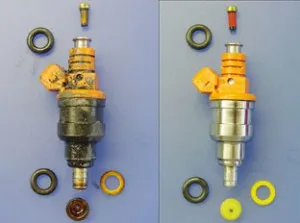
Photo: Unknown authorUnknown author, Public domain, via Wikimedia Commons
Walk into any car meet from Pomona to Philly and you'll hear the same half-whispered conversations. Someone's cousin got a full JDM engine harness for a fraction of retail. A guy in a Discord server is selling "cloned" ECU maps that supposedly replicate a $2,000 pro tune for $80. A shipping container from Osaka allegedly landed last week with parts that haven't been legal to import for a decade. The tuning scene has always had a shadow economy running parallel to the legitimate one—but lately, that shadow has gotten a lot bigger and a lot harder to ignore.
This isn't just about saving money. It's about access, identity, and a community that's been told "no" so many times it stopped asking permission.
The Pipeline Nobody Talks About Out Loud
The gray market for performance parts operates across a surprisingly organized infrastructure. At the top end, you've got importers—sometimes operating as legitimate businesses—who source Japanese domestic market components that were never federally certified for US roads. Think Skyline R34 parts, specific Honda Type R variants, Mitsubishi Evolution trims that never crossed the Pacific through official channels. Some of this is technically legal. Much of it occupies a murky regulatory space that Customs and Border Protection hasn't fully figured out how to police at scale.
Below that tier is where things get genuinely sketchy. Counterfeit suspension components, knock-off coilovers with brand-name stickers and zero-name internals, brake pads that test at a fraction of the claimed friction coefficient. The performance looks fine on paper—until it doesn't, usually at the worst possible moment.
Then there's the digital underground: cloned tune files, cracked versions of professional mapping software, ECU calibrations pulled from one car and sold as universal fixes for an entirely different platform. This segment has exploded in the last three years, largely because the barrier to entry is basically a laptop and a forum account.
The Quality Gamble Is Real—And Sometimes Worth It
Here's the uncomfortable truth that the legitimate industry doesn't want to say out loud: not everything coming through the gray market is garbage.
Certain JDM parts—genuine ones, not counterfeits—are legitimately superior to their US-market equivalents. Japanese manufacturers sometimes spec higher-grade materials for domestic consumption while shipping down-rated versions abroad for liability or regulatory reasons. Enthusiasts who know how to verify provenance, inspect casting marks, and cross-reference part numbers can score real hardware at significant discounts. In those cases, the gray market is less about cutting corners and more about navigating a system that was never designed with the American tuner in mind.
The problem is that verification takes expertise most buyers don't have. A convincing fake can pass casual inspection. Counterfeit coilovers with machined aluminum bodies and professional-looking packaging have fooled experienced builders. Brake components are especially dangerous—the consequences of a fake caliper bracket failing at triple-digit speeds aren't abstract.
"I've seen guys spend eighteen months building a car on parts they thought were legit and then find out at the dyno that half their drivetrain is mystery-brand garbage with a logo stamped on it," says one independent shop owner in the Southeast who asked to stay anonymous. "It's not always the buyer's fault. These fakes are getting really, really good."
The Cat-and-Mouse With Legitimate Manufacturers
Brands like Tein, HKS, and BC Racing have invested heavily in anti-counterfeiting measures—QR-coded authentication stickers, serialized packaging, regional distributor verification portals. Some have gone further, embedding microprinted codes in inconspicuous locations on the parts themselves. It's an arms race, and the counterfeiters are keeping pace.
For every new authentication layer a legitimate brand introduces, a parallel version surfaces within months. The speed of adaptation is striking. Factories in certain manufacturing regions have become so sophisticated at replication that they'll sometimes produce genuine product runs for a legitimate brand during the day and counterfeit runs using the same tooling after hours. The parts are physically identical. The supply chain is what separates them.
US Customs seizures of counterfeit auto parts have increased year over year, but enforcement is resource-constrained and the volume of packages entering the country through e-commerce channels makes comprehensive inspection impossible. The underground knows this and ships accordingly—small packages, split shipments, ambiguous customs declarations.
Discord, Telegram, and the New Storefront
The marketplace itself has migrated. What used to happen through classified ads and word-of-mouth at local meets now runs through invite-only Discord servers, private Telegram channels, and semi-public groups on platforms that look the other way as long as nothing explicitly illegal gets posted.
These communities have their own reputation systems—sellers get rated, disputes get arbitrated by server admins, and bad actors get publicly blacklisted. It's a functioning micro-economy with its own norms and enforcement mechanisms. In some ways it's more accountable than buying from a random overseas storefront with five-star reviews that were clearly purchased.
The digital tune market operates the same way. A builder with a solid reputation in these spaces can move hundreds of calibration files a month, undercutting licensed tuners by 80 to 90 percent. Whether those files are actually optimized for the buyer's specific car, with its specific mods and fuel quality and climate, is a different question entirely—and one that doesn't get asked often enough.
Where This Leaves the Scene
The underground parts economy isn't going away. It's too embedded, too useful, and too culturally central to the tuning community to be legislated or litigated out of existence. What it's doing instead is forcing a reckoning about standards, accountability, and risk.
The builders who thrive in this environment are the ones who know how to navigate it—who can spot a fake, verify provenance, understand which gray-market sources are reliable and which are rolling the dice with your safety. That knowledge is real currency in this scene, passed down through mentorship and hard-won experience.
Everyone else is gambling. Sometimes they win. Sometimes they find out exactly what that knock-off caliper is worth when they need it most.
Build smart. Verify everything. And maybe ask one more question before you wire that money to a stranger in a Discord DM.