Dark Signal: The Digital Tradecraft Keeping Underground Builders Off the Radar
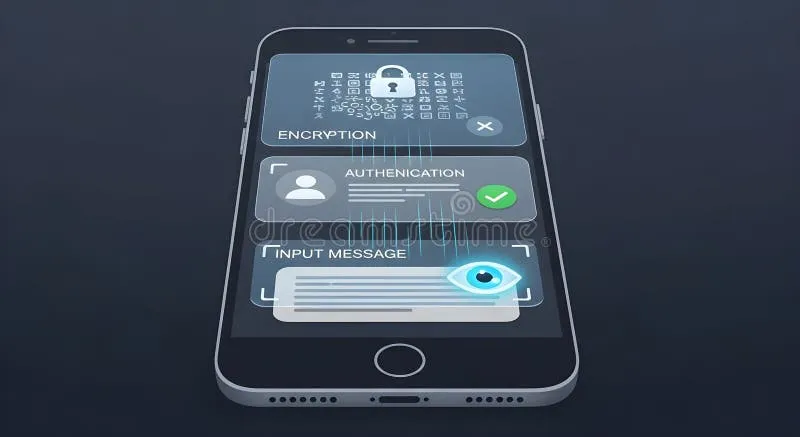
Photo: encrypted smartphone messaging dark screen privacy, via thumbs.dreamstime.com
There's a version of street racing culture that still lives in Hollywood's head — guys with flip phones, word-of-mouth meetup spots, and a lookout posted at the end of a industrial road. That version isn't entirely dead. But the real underground in 2024 looks a lot more like a cybersecurity operation than a scene from a mid-2000s import flick.
The builders who've lasted — the ones who haven't had their cars seized, their shops raided, or their names run through a database — figured something out a long time ago. The fastest thing you can build isn't a motor. It's a communications network that leaves no trail.
Why the Old Ways Got Burned
For a while, Facebook groups and public Discord servers were the connective tissue of local scenes. Easy to use, easy to find, and — as it turned out — embarrassingly easy to monitor. Law enforcement agencies across the country, from LAPD's street racing task forces to local county sheriff departments in the Southeast, have documented using social media monitoring as a primary intelligence-gathering tool. They don't need a warrant to watch a public group. They just need an account.
The crackdowns that followed weren't random. Meets that got hit had almost always been organized in plain sight. Organizers who got charged had digital paper trails that prosecutors didn't even have to work hard to build. Screenshots, timestamps, usernames tied to real identities. It was handed to them.
The scene adapted. It had to.
The App Stack That Runs the Underground
Ask around in any serious regional build community right now and you'll find a layered communications setup that would make a privacy journalist nod with approval.
Signal sits at the foundation for most crews. End-to-end encrypted, disappearing messages enabled by default, and no metadata stored on their servers. It's not perfect — if your phone gets physically seized, the conversation history is still there — but for operational security against passive surveillance, it's miles ahead of iMessage or WhatsApp. Serious organizers set messages to auto-delete within 24 hours. Some go shorter for anything meet-related.
Telegram is more controversial. It's popular because of its group size capacity and features, but privacy researchers have noted it doesn't default to end-to-end encryption for group chats. Crews that use it tend to treat it as a middle layer — broad community stuff, nothing operational. Think of it as the lobby, not the back room.
The back room is increasingly Session, a Signal fork that doesn't require a phone number to register. No phone number means no SIM card linkage, which means one less thread for anyone to pull. It's clunkier, less intuitive, but among builders who've been around long enough to get burned once, that friction is worth it.
Burner phones haven't gone away either. Prepaid devices purchased with cash, activated on a public WiFi network, used for a specific event window and then either wiped or discarded. Old school in concept, still effective in practice. The key detail most people miss: the burner has to stay off and physically separate from your daily driver phone. Carrying both defeats the point — cell tower data can place two devices in the same location pattern over time.
The Language Layer
Beyond the apps themselves, there's a whole coded vocabulary that functions as a second line of defense. It's not elaborate spy-movie stuff. It's practical shorthand that means nothing to an outside reader skimming a thread.
Meet locations referenced by old business names that no longer exist. Time communicated in offsets — "standard plus two" meaning two hours after a pre-agreed baseline. Car descriptions stripped down to color and a single letter standing in for make. Event cancellations signaled by posting a specific unrelated image rather than any explicit text.
Forum culture has its own version of this. Certain long-running regional boards operate with a tiered access system — public-facing content that looks like a normal enthusiast forum, and then verified member sections that require vouching from existing members before access is granted. The vetting process can take weeks. What lives in those deeper sections looks, to anyone who stumbled in, like mundane car talk. Context is everything.
The Cat-and-Mouse Gets Smarter on Both Sides
Law enforcement hasn't been standing still. Undercover infiltration of online communities is documented and ongoing. The challenge for investigators is that the more compartmentalized a network gets, the harder it is to penetrate at a level where operational intelligence actually lives. Getting into the public forum is easy. Getting vouched into the inner tiers takes time and social capital that's hard to fake convincingly.
Geofencing warrants — where law enforcement requests data on all devices present at a specific location during a specific time window — have become a tool that the scene is increasingly aware of. The response has been straightforward: leave the daily phone at home. Show up clean. It's inconvenient. It works.
There's also growing awareness around IMSI catchers, sometimes called Stingrays — devices that mimic cell towers and can be deployed at or near an event to collect device identifiers. The countermeasure, again, is the phone you don't bring. Or the burner that's been sitting off since you left the house.
The Trust Problem Is the Real Security Layer
Here's the thing that no app solves: humans. Every serious builder will tell you that the most significant security breaches they've seen or heard about didn't come from cracked encryption or sophisticated surveillance. They came from someone talking too much, bringing the wrong person in too fast, or getting arrested on something unrelated and deciding cooperation looked better than consequences.
The tightest networks are small. They grow slowly. New people get brought in through chains of personal accountability — you vouch for someone, their actions are partly on you. That social architecture is older than any messaging app and more reliable than any of them.
The technology matters. But the technology is just the infrastructure. The real operational security in underground build culture has always been about who you trust, how you vet them, and how much you actually need to say out loud.
Stay low. Run clean. Know who's in the room.