Know Before You Go: The 2025 Field Guide to How America Actually Races
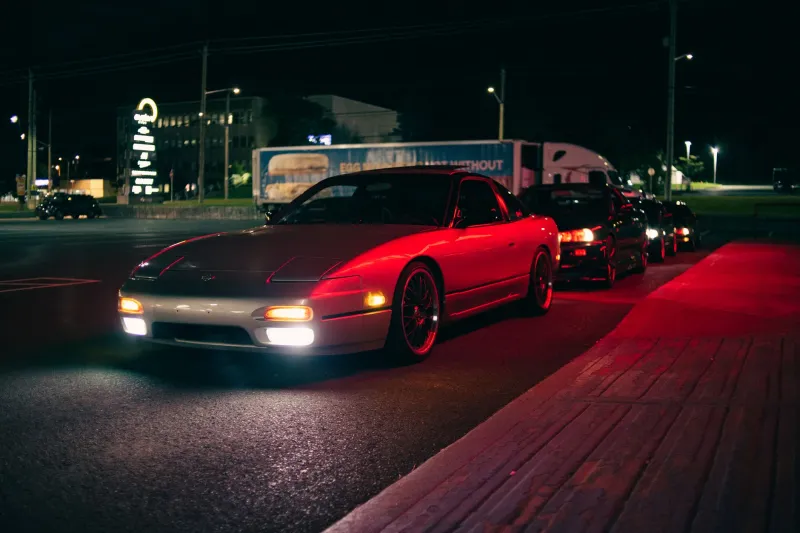
Show up to a no-prep event in Texas with a full prep car and you'll stick out before you unload. Show up to a Midwest dirt strip in a street car on street tires and you might as well be driving a minivan. American street racing isn't one scene — it's a patchwork of regional formats, each with its own etiquette, its own classes, and its own unwritten laws.
Here's the lay of the land in 2025.
Texas and the South: No-Prep Is King
No-prep means the surface gets nothing — no traction compound, no dragging, no vht. Just bare asphalt, which is closer to ice than most people expect. What started as a backroad format is now semi-organized, with events drawing hundreds of cars and real purses in the bigger classes.
The format: Mostly dig racing, with roll race brackets mixed in at bigger events. Classes run from street tire small-tire up to the big-tire monsters.
The etiquette: Don't touch the starting line. Seriously — walking the tree area, scuffing the surface, or dragging your jackstands across the launch zone gets you escorted out. Betting is verbal, immediate, and settled on the spot. Backing out of a call-out is social suicide.
The build: Torque converters and suspension trump horsepower. A 900 HP car that hooks beats a 1,500 HP car that spins. Big tires, soft launches, and a driver who can feather a throttle.
The Midwest: 40-Pull and Dirt
Head north and the pavement ends. Dirt and gravel strips — often literally farm roads closed for a night — host the 40-pull scene, where cars race 40 feet of loose surface from a dig.
The format: Short, violent, and won at the launch. AWD dominates, but the big-money small-tire guys run modified RWD setups with skinny fronts and a whole lot of wheel speed management.
The etiquette: These are often private events on private land. You're there because someone vouched for you. Bring what you said you'd bring, don't bring drama, and understand that the hosting family's rules are the only rules.
The build: AWD swaps, torque management, and tires that work in dirt. Street cars don't belong here — this is purpose-built territory.
The Coasts and Cities: Roll Racing Rules
Urban density killed the dig. Long on-ramps and industrial parkways made roll racing the format of choice from LA to Atlanta to the Northeast corridors.
The format: Common start speeds — 30, 40, or 60 mph — with a finish somewhere between a quarter and half mile. Some events run brackets; others are pure call-out culture in the left lane at 1 a.m.
The etiquette: The slower car sets the pace and the faster car signals the go — usually a horn, a hand out the window, or three downshifts. Never brake-check to gain an advantage; that's how people die. If you lose, give the thumbs-up and move on. Chasing someone down after a loss ends nights badly.
The build: Gearing and powerband matter more than peak numbers. A car that pulls from 40 to 130 in one long breath beats a peaky setup that needs a downshift it doesn't have time for. Cooling matters too — back-to-back pulls cook street builds that never got a proper heat management pass.
So Which Format Is Your Build?
Match the car to the scene before you spend another dollar:
- Heavy auto, big torque, soft suspension? Go no-prep in the South.
- AWD swap, launch control, dirt-spec rubber? The Midwest pulls are calling.
- Top-end power, tall gearing, sorted cooling? Roll racing, coast to coast.
One universal truth across every format: the locals can spot a tourist in one pass. Show up humble, ask questions before you make call-outs, and let your driving do the talking. Every region respects speed. What they respect more is somebody who knows how to act.